No one should
ever be left alone
after a
fall.
CareAck ensures every detected risk is acknowledged, verified, and physically resolved — not dismissed.
Because alerts without accountability are not enough.
no staff is present
in elderly care
help actually arrived
detection response
The Problem
The most dangerous room is the one where no one is watching.
Every year, millions of seniors fall in private spaces — bathrooms, bedrooms, hallways. Current monitoring systems detect the fall. They send an alert. Then they move on. No one verifies that help actually arrived.
Why Current Systems Fail
Detection is not protection.
Existing systems create a false sense of security. Here's what actually happens.
Acknowledged Remotely
A caregiver taps "Acknowledge" on their phone from a break room. The system marks it as handled. No one moves.
Alert cleared. Patient still on floor.Silenced
Repeated alerts create fatigue. Staff silence them to focus on "real" emergencies. The system offers no resistance.
Alert silenced. No escalation.Forgotten
Shift changes happen. Handoff notes get lost. A patient who fell at 2 AM is discovered at 6 AM rounds.
4 hours on the floor. Unacceptable.CareAck System Architecture
Responsibility Until Verified Resolution
Persistent Unresolved Risk State — the core of CareAck
Escalation continues until resolution is independently verified.
How It Works
Seven steps. Zero loopholes.
From detection to verified resolution — every step is enforced, every action is logged.
Detection
mmWave radar and environmental sensors identify abnormal patterns — falls, prolonged immobility, unusual positions.
Qualification
AI analyzes sensor data to distinguish genuine risk from false positives. Context matters — bathroom vs. bedroom, time of day, movement history.
PURS Lock
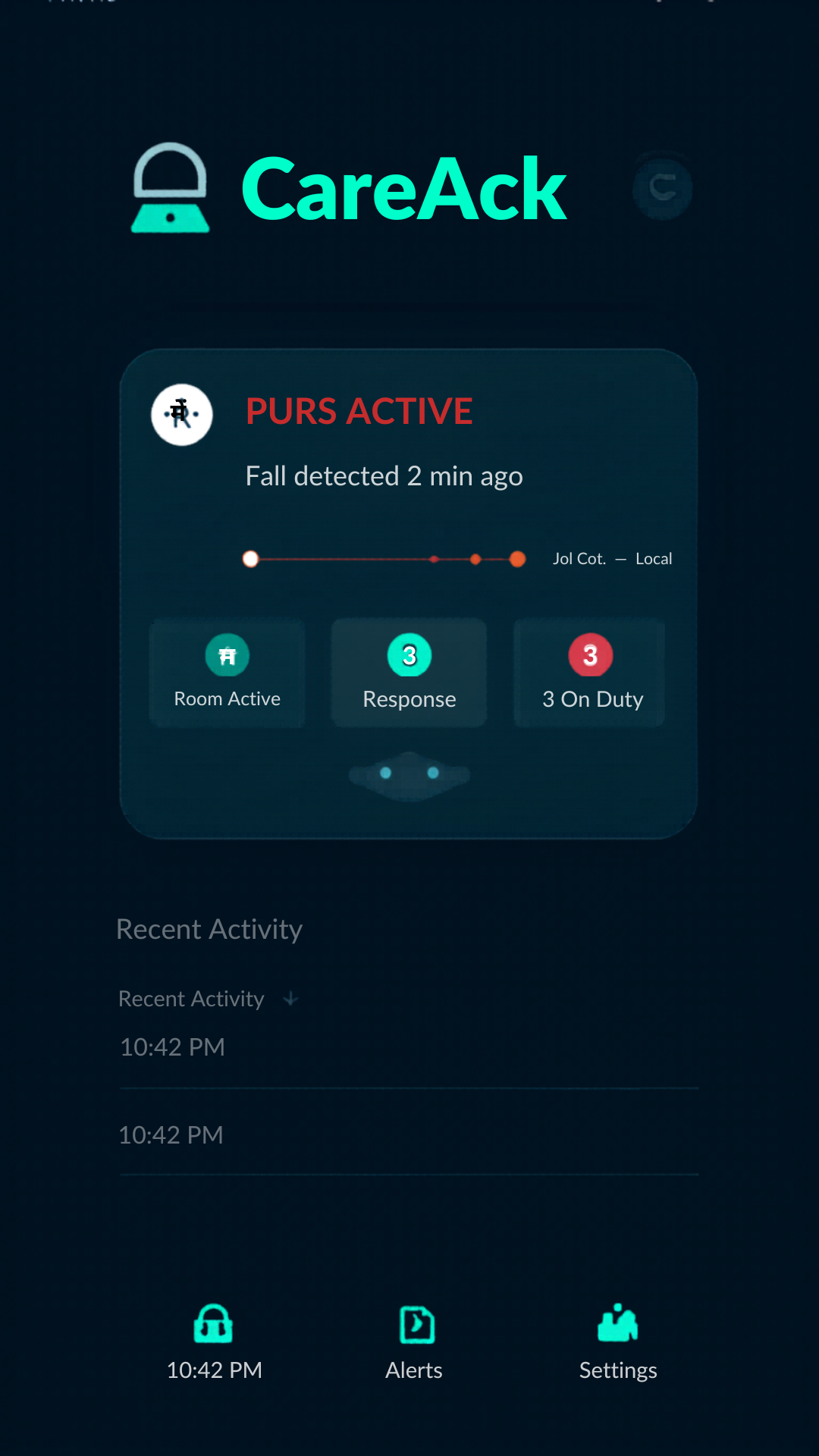
Confirmed risk triggers PURS. The system locks into an unresolvable alert state. No one can dismiss, silence, or bypass it.
PURS ActivatedAssignment
The nearest available caregiver is notified with room location, risk type, and urgency level. Assignment is tracked and timestamped.
Escalation
No response? The system escalates automatically — supervisor, then facility manager, then emergency services. It never stops.
Never Stops EscalatingVerification
CareAck verifies resolution through two independent methods — sensor data (Objective Resolution) or physical presence confirmation (Resolution Confirmation).
Resolution
Only after verified resolution does PURS unlock. Complete audit trail logged — who responded, when, how the situation was resolved.
PURS ReleasedVerified Resolution
Two paths. Both verified.
CareAck doesn't trust words. It verifies outcomes through independent sensor data or confirmed physical presence.
Sensor-Verified Recovery
The person resumes normal activity patterns. Sensors independently confirm standing, walking, or stable positioning — without anyone pressing a button.
- Normal activity patterns restored
- Verified by independent sensors
- No human intervention required
Caregiver-Verified Presence
A caregiver is physically present in the room with the patient. Their presence is confirmed by the room's sensors — not by a button tap from a hallway.
- Physical presence in the room
- Verified by room sensors
- Cannot be faked remotely
Escalation Engine
It never stops until someone shows up.
CareAck's escalation engine is relentless by design. If the assigned caregiver doesn't respond, it climbs the chain — automatically, without delay, without mercy.
Technology
Technology detects. CareAck enforces.
Works with any sensing technology. The intelligence is in the response protocol.
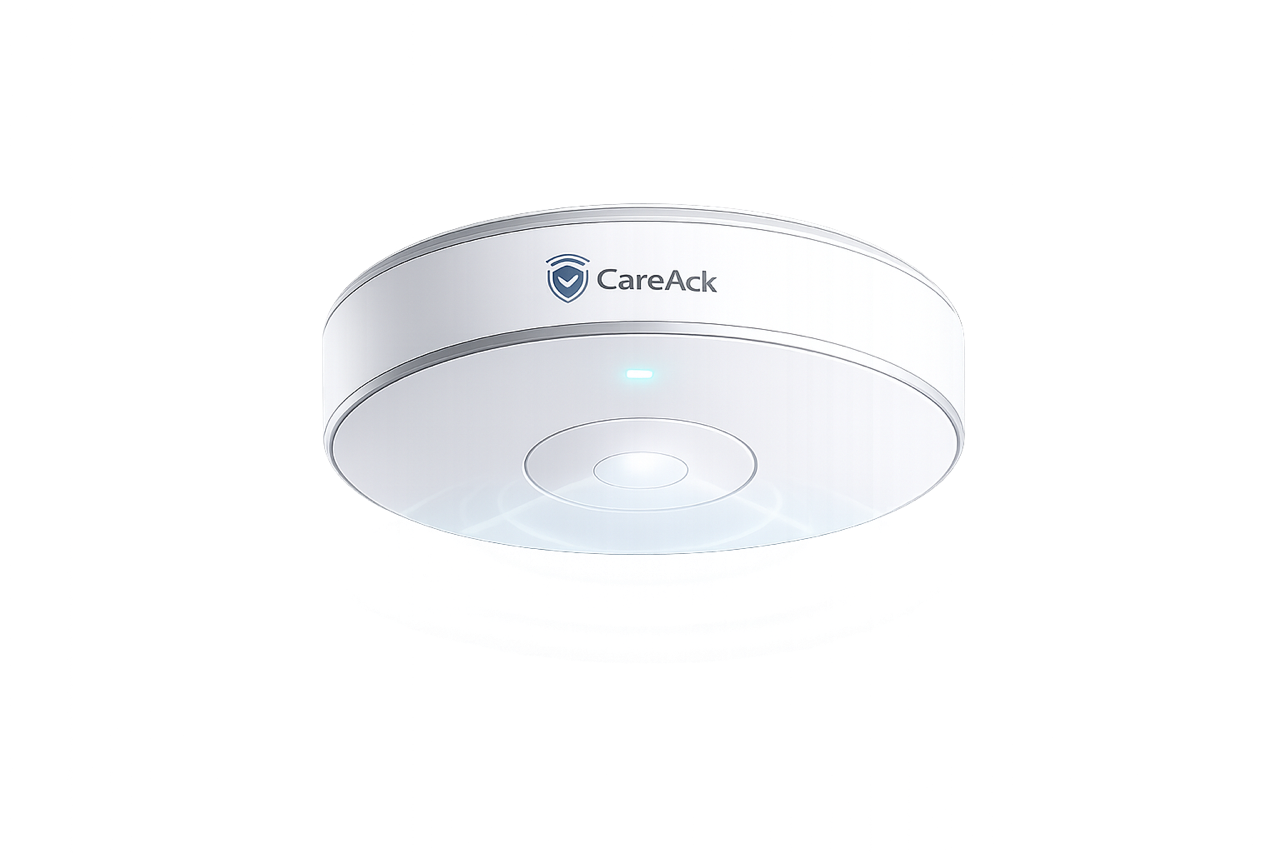
mmWave Radar
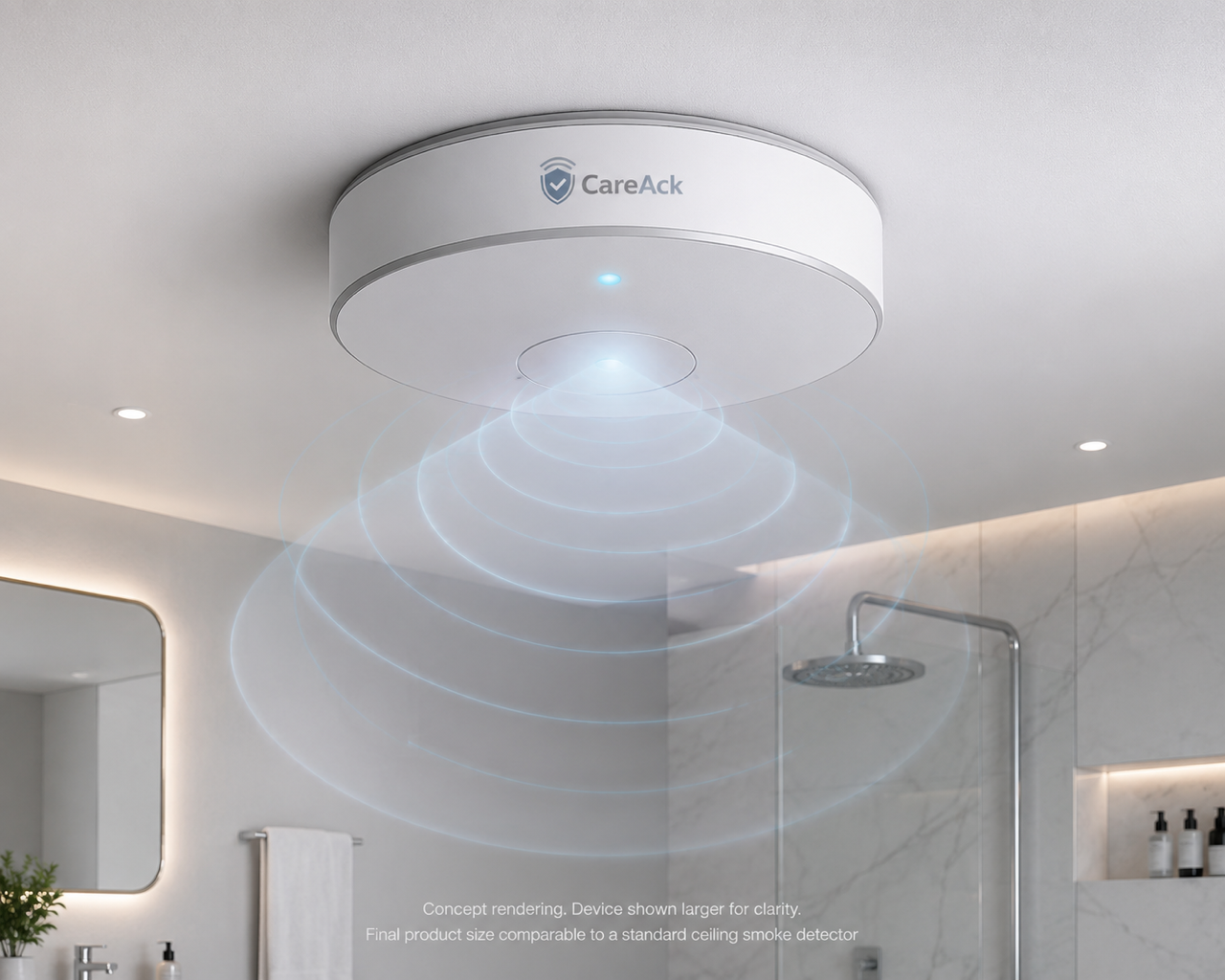
Sub-millimeter motion detection. Works through clothing, darkness, and steam. No cameras needed.
Real-Time Vital Signs Monitoring
Contactless monitoring of breathing, heart rate, and occupant presence — captured overhead, without cameras or wearables.
AI Classification
Machine learning models distinguish fall events from routine movements with continuously improving accuracy.
Designed for verified response in high-risk bathroom environments.
Ultra-lightweight discreet installation.
Persistent verified response technology for healthcare environments.
Real Life Use
Every room. Every risk. Covered.
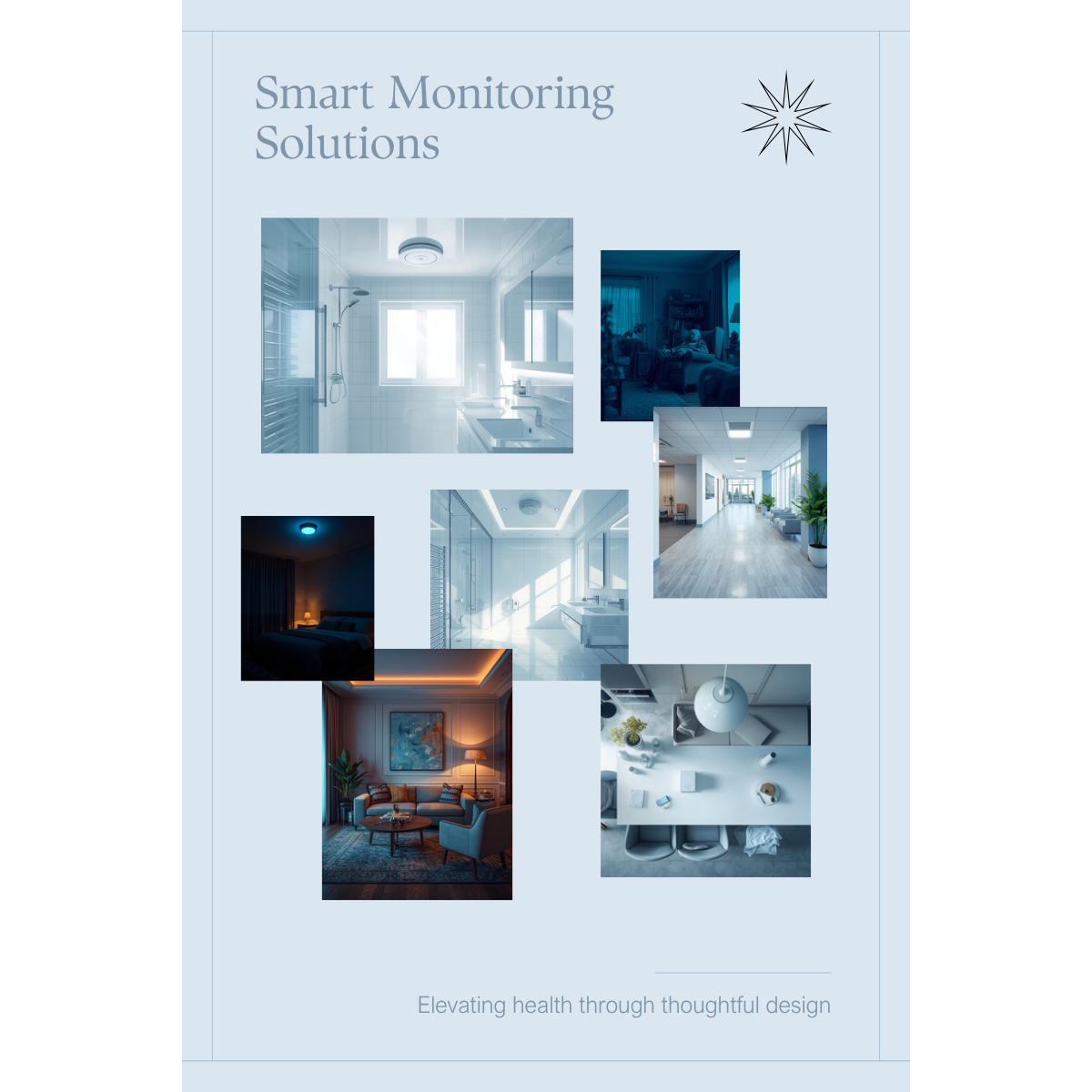
CareAck adapts to the unique risk profile of each space in a care facility.
Bathrooms
Bedrooms
Nighttime falls during bathroom trips are the most common. CareAck monitors 24/7, especially during critical overnight hours.
Living Spaces
Common areas, hallways, dining rooms — comprehensive coverage for all communal spaces in the facility.
Full Facilities
Scalable architecture for entire care facilities — centralized monitoring, distributed sensors, unified response protocol.
Pilot Program
Join the Pilot Program
Bathroom-first deployment — the highest-risk room, the hardest to monitor, the most important to protect. We're now accepting applications from care facilities.
Limited spots available. Priority given to long-term care facilities.
Why Now
The convergence is here.
Four forces are aligning to make CareAck not just possible — but inevitable.
Aging Population
By 2030, 20% of the U.S. population will be 65+.
Caregiver Shortages
Fewer staff means less direct supervision. Technology must fill the gaps — but only if it guarantees action.
Technology Ready
mmWave, AI, and IoT have matured enough to enable reliable, non-invasive, privacy-respecting monitoring.
The Gap Is Accountability
Detection exists. Alerts exist. What's missing is verified proof that someone showed up. That's CareAck.
Every detected risk must be acknowledged.
Verified. Resolved.